
Get found when clients ask AI for help and see your progress along the way.
The way people find service providers is shifting. Instead of typing keywords into Google, more people are asking AI assistants like ChatGPT and Perplexity, or they’re using Google’s AI Overviews for recommendations.
Here are what some of the searches look like: “What’s a good psychotherapy practice near me?” “Who does fractional CMO work for wellness businesses?” “Recommend an architect who specializes in sustainable design.”
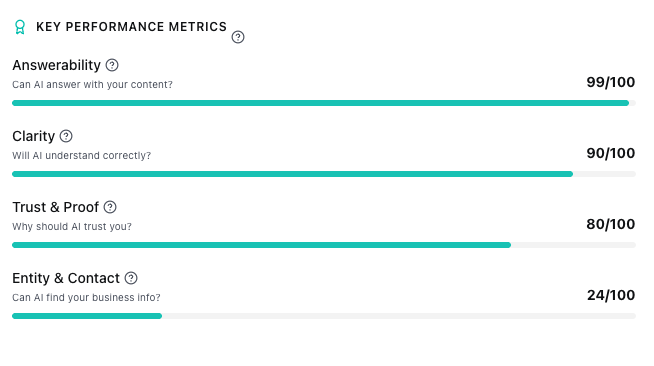
When potential clients ask these questions, AI doesn’t search the web the way Google used to. It synthesizes information from multiple sources and makes recommendations based on how well it understands who you are and what you do.
Most established businesses have no idea whether they appear in these responses, or who’s showing up instead.
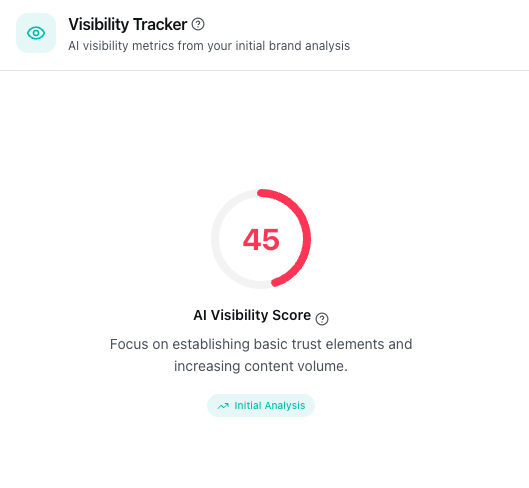
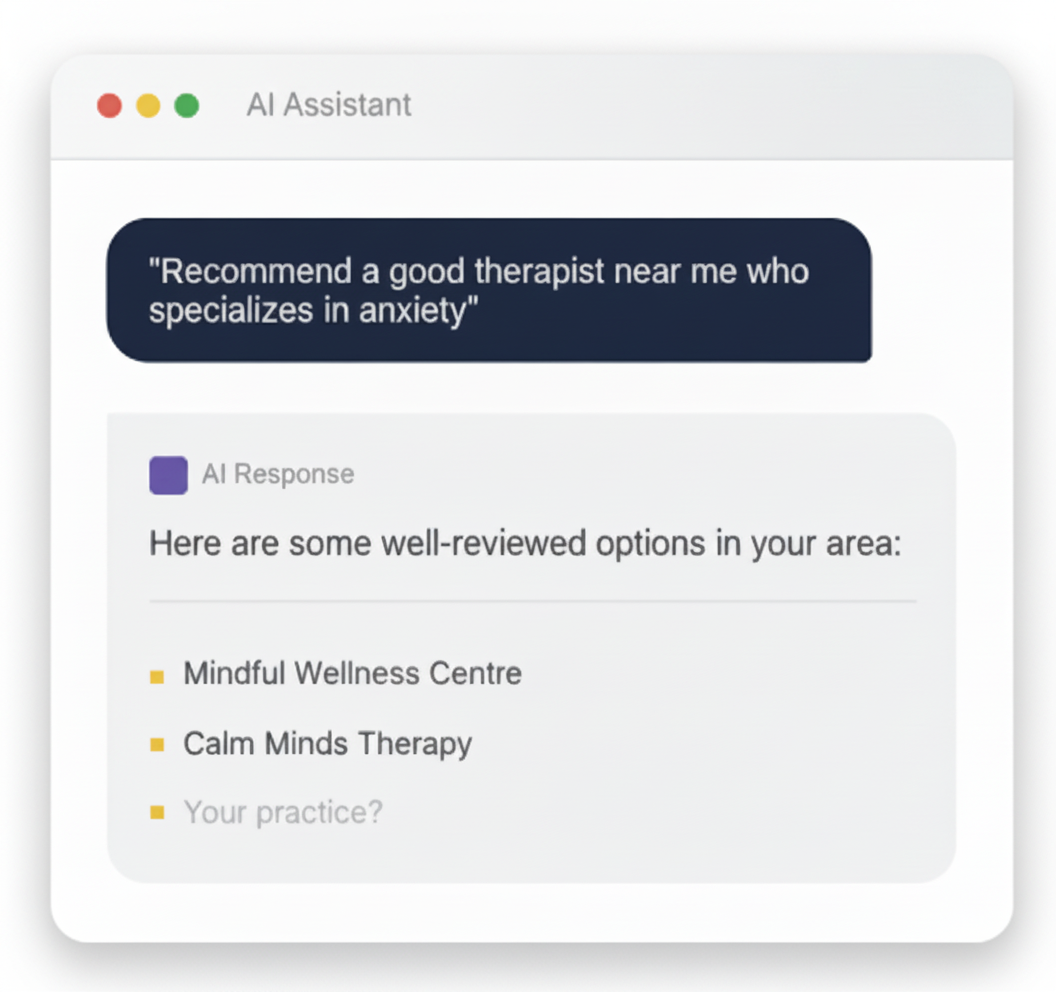
Businesses that spent years building their reputation and SEO presence aren’t necessarily as visible in AI-driven discovery. Meanwhile, competitors with the right copy and better-structured information on their website, not necessarily better services, are getting recommended.
This isn’t about chasing another marketing trend. It’s about understanding a fundamental shift in how people find the services they need.
Traditional SEO optimized for search intent and keywords. AI visibility requires something different: clarity about who you are, what you do, and why you’re credible. It needs to be structured in ways that AI can actually understand and cite.
It’s not:
It is:
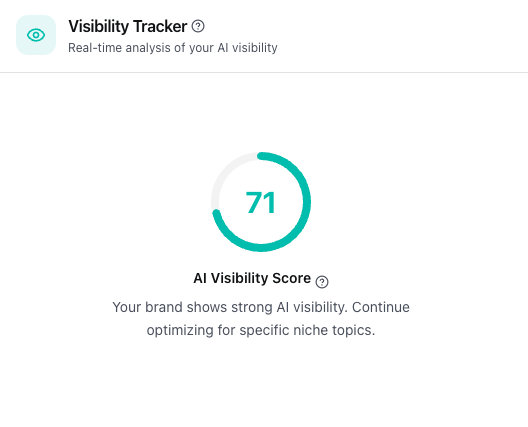
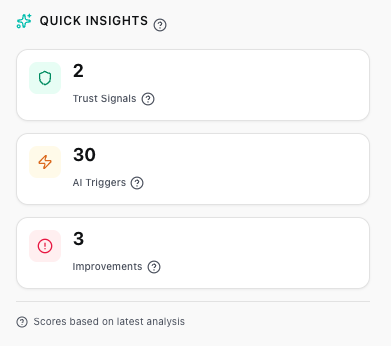
Twenty-five years ago, if you weren’t in the phone book, you were invisible.
Fifteen years ago, if you weren’t on page one of Google, you were invisible.
We’re at another inflection point. AI-powered discovery is changing how people find services, and most businesses haven’t caught up.
The businesses that adapt early won’t just maintain their visibility; they’ll gain it because of their first-mover advantage. They’ll capture the attention that their slower-moving competitors are losing.
I’ve been watching platform shifts change how businesses get found for over two decades. The pattern is consistent: early adapters gain an advantage, and everyone else scrambles to catch up.
AI visibility isn’t about replacing your existing marketing. It’s about augmenting it for 2026 by making sure the reputation and expertise you’ve built actually show up when AI is doing the recommending.
This is measurement marketing applied to a new problem, using data to understand what’s actually happening, then making strategic decisions based on evidence rather than guesswork.
3x more likely to be mentioned
Brands that actively optimize for AI visibility are up to three times more likely to be cited in AI-generated answers for their priority queries than brands that do not.
+40% increase in AI answer presence
In 2026, companies that implement structured FAQs, schema, and entity cleanup commonly see 30–50% increases in AI answer visibility within 3–6 months.
2x higher AI share of voice vs. competitors
Early adopters of AI visibility optimization often capture roughly double the AI “share of voice” (portion of mentions vs. competitors) in their niche.
Book an AI visibility check, and we’ll show you exactly what potential clients see, or don’t see, when they ask AI for help finding someone like you.
No. Traditional SEO optimizes for search engine rankings using buyer intent, keywords and backlinks. AI visibility is about how AI systems understand and represent your business when they’re generating recommendations. There’s overlap, but the strategies are different.
That’s up to you. If your current marketing is working and you’re comfortable with your lead flow, this might not be urgent. But if you’ve noticed changes in how people find you, your website traffic is decreasing or you’re curious about how the shift to AI-powered discovery might affect you, it’s worth understanding where you stand.
This isn’t a quick-fix tactic. Changes to how AI perceives your business take time to propagate across platforms. The AI Visibility Check gives you immediate clarity on your current situation. Implementation and results from the Sprint or Retainer develop over months, not days.
You can manually test queries in ChatGPT and Perplexity to see if you appear. What’s harder without specialized tools is getting a systematic view of your visibility, tracking changes over time, and knowing what specific changes will actually help.
If your clients never use AI assistants to find services, this may not be a priority. But for service-based businesses, especially wellness, professional services, and local businesses, AI-powered discovery is already affecting how people find providers.
I have seen this provide a business with a head start in AI visibility, but there are additional tweaks that can be made to the structure of the website and the copy that is used. Sometimes the way that the copy is phrased needs to be adjusted or the schema markup needs to be optimized further. AI visibility doesn’t replace search engine optimization, it augments it.